
Concrete retaining walls in Austin MN - a wall that holds your slope and drains well
Dirt washing onto the lawn or an old wall leaning out? We build concrete walls planned for the soil and the water behind them.
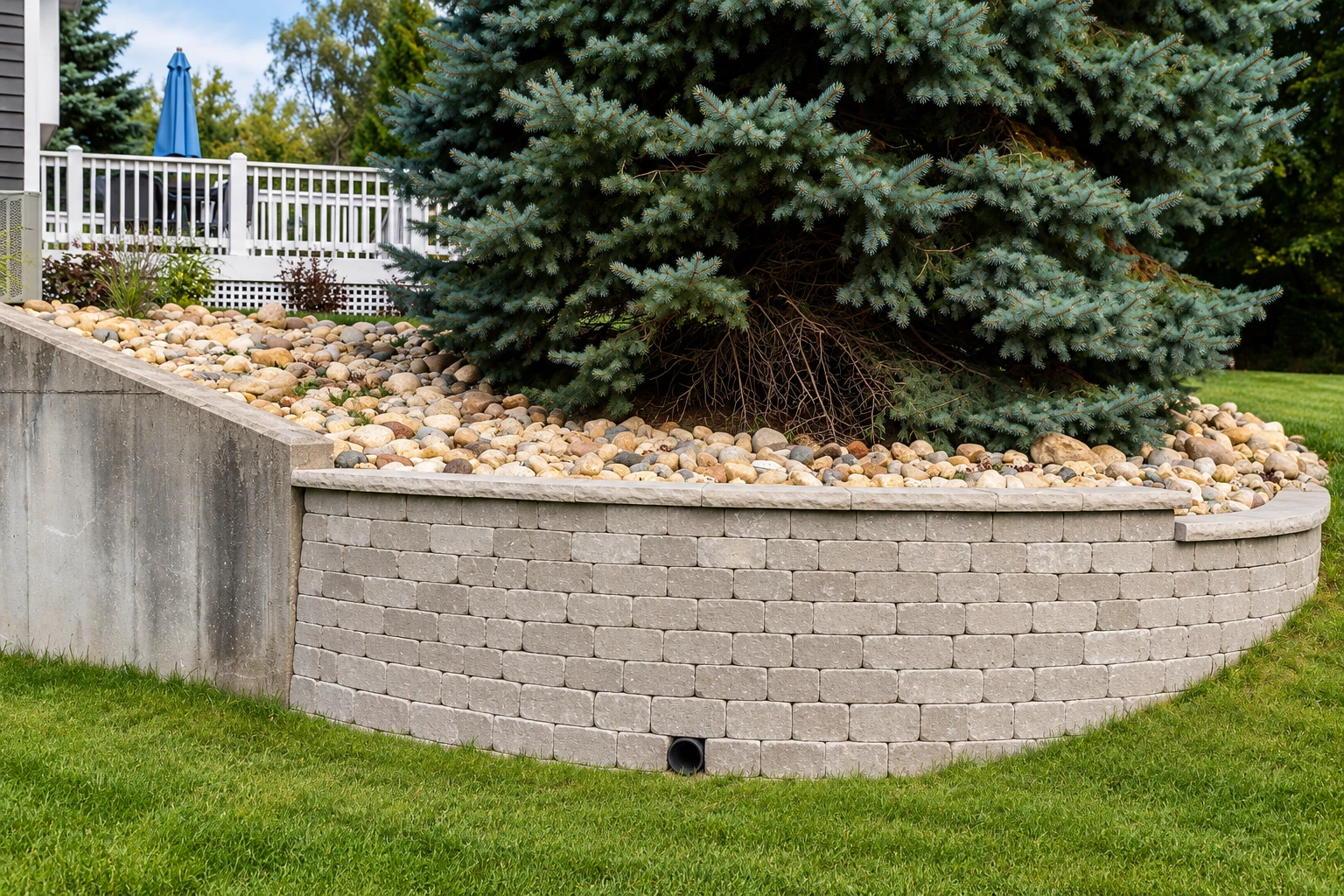
Do I need a retaining wall, and what goes into one?
A concrete retaining wall holds back soil that pushes sideways, along with the water, frost and any weight sitting above it. Austin Concrete Company builds them in Austin, MN so your slope stays put and the water behind the wall has somewhere to go.
Most calls I get start with a slope that keeps washing onto the lawn or an old wall that's tipping forward, and dirt is patient, so it'll keep pushing until something built for it holds it back. The price comes down to how tall and long the wall runs, whether it's block or poured, how deep the footing digs and whether a driveway, a shed or a pool deck sits above it, since that weight presses on the wall too. The schedule turns on utility locates, any permit, the weather and curing, which is the days poured concrete needs to gain strength before we backfill against it. I'll give you your own number once I've stood on the slope, and we do the same work in Albert Lea, Stewartville, Kasson and the cities around them.
How do you know your slope or old wall needs help?
Most of what tells you a wall is needed shows up after a heavy rain or a hard winter, so walk the slope then and look for these.
Dirt and mulch wash down the slope after every hard rain, which usually means the grade needs holding.
An old timber or block wall leans out at the top, so the soil behind it is winning.
Cracks run through an existing concrete wall or the face chips after winter, often from water freezing behind it.
Water seeps through the face or puddles at the base, a sign the wall isn't draining like it should.
Part of your yard is too steep to mow or use, and a wall could give you level ground.
A driveway or patio edge beside a drop-off is sinking, usually because the ground under it is slipping away.
If a wall is already leaning or the slope moves after each storm, call now rather than next spring, because that dirt will keep on pushing.
What happens when you call about a retaining wall in Austin?
I run every wall job the same way, from the first look at your slope to the walk-through at the end, so here's how it goes from your side of the driveway.
Call me or send the form
You call (507) 509-6215 or send the form, and I'm the one who answers and sets a time to come out. I look at the job myself, so you're talking to the person who'll be there running it.
I measure and look around
I measure the slope and look at what the wall will hold back and where the water behind it is going to run. We talk through what you want, and I price a block wall and a poured wall side by side so you can compare.
You get a written estimate
The estimate spells out each part of the work, from the dig and the footing to the drain stone and outlets, so nothing's hiding in one lump number. Once you say go, we line up utility locates, permits and inspections where they're needed and schedule the pour.
We build it and walk it
I'm on site with our crew through the finish, so the guy who measured your slope is the one watching the forms and the pour. Before we pack up we walk the job with you and go over how to look after it.
Get your retaining wall priced in block and poured
We get back to you within one business day to set up a free on-site visit, and I come look at the slope myself. You get a written quote with what's included, and there's no obligation.
- Call
- (507) 509-6215
- Hours
- Mon–Fri: 7 AM–11 PM, Sat–Sun: 8 AM–10 PM
Block or poured walls, and what goes behind them
A poured wall is one solid piece of concrete on a footing, with rebar, the steel bars inside that keep it from bending under the push of the dirt. A block wall stacks heavy concrete units with no forms. Poured makes sense where you want a clean, straight face or the wall ties into steps, and a level shelf cut into a hill often ends up carrying a concrete floor for a shop or shed.
Water backed up behind a wall can pile a lot of extra weight on it and cause leaks and freeze damage, so the wall gets drainage stone behind it, a filter that keeps fine dirt out of the stone and outlets that let the water out. That all gets buried, and it's the first thing people want to cut, but I'd rather trim the face than the drainage. Your part afterward is keeping those outlets clear.
If your yard runs down toward the Cedar River, Turtle Creek or Dobbins Creek, check the flood maps first, because the City of Austin names those as its major flood sources and keeps the 100 year floodplain maps at the City Engineer's Office. Any part of a wall below the ordinary high-water level needs a public waters work permit from the DNR and has to meet floodplain rules, so call your DNR Area Hydrologist first.
Retaining wall questions we hear in Austin
How much does a retaining wall cost in Minnesota?
Retaining wall construction in Minnesota usually costs about $33 to $44 per square foot, and that's the going rate around the state, not a quote from us. Prices move with the kind of project, where the site is, how complex the design gets and how much work is in it. Your estimate is where you get your own number.
What is the best way to save money on a retaining wall?
Pricing a segmental block wall beside a poured one is usually the best place to start, because a concrete masonry trade group's design manual says block walls typically cost 25 to 40 percent less than poured concrete walls. I'll put both side by side on your estimate so you can pick with real numbers in front of you.
Do I need a permit for a retaining wall in Austin, MN?
The city says permits are needed for any building or structure, and state rules exempt retaining walls up to four feet tall, measured from the bottom of the footing, when there's no added load like a driveway or building above them. We're licensed and insured, and when a job needs a permit we handle the paperwork and set up the inspections, and if it isn't clear, we call the city and ask before we start.
How deep does a retaining wall footing need to go in Austin?
In Mower County the state sets the minimum footing depth for frost at 3-1/2 feet, unless an engineer finds otherwise for the site. Poured wall guides say a poured wall's footing should always sit below the frost line. Block walls are different, since one block maker, Allan Block, says its walls are designed to move and their base doesn't need to go past frost depth.
Can concrete be poured for a retaining wall in cold weather?
Yes, concrete poured in the cold still gains enough strength and durability when it's mixed, placed and protected properly. Industry cold-weather guidance treats it as cold weather once the air drops, or is expected to drop, below 40°F while the concrete needs protecting, and the colder it gets, the more protection it needs.
How do I know a retaining wall is designed right before it's built?
Ask how the footing size, the steel, the depth it's buried and the drainage were each set, because wall height alone isn't enough to size a retaining wall. Those should come from a design or the code, not a guess. It's also fair to ask how the crew keeps fine dirt out of the drain stone while they backfill behind the wall.
Other concrete work that goes with a wall
Concrete floor installation
If the new wall cuts a level shelf into your slope for a shop or storage building, we can pour the floor that sits on it too.
Concrete pool decks
A pool on a sloped lot often needs a wall to hold the grade, and the deck around it should be planned to drain away from both.
Send us a look at your slope
Call (507) 509-6215 or use the form with the wall's rough height and length, a few photos and what sits above it, so my first visit gets right to the useful part.
Mon–Fri: 7 AM–11 PM, Sat–Sun: 8 AM–10 PM