
Slab foundation building in Austin MN - a base built for your soil and our winters
Planning a home, addition or garage on a slab? We check the ground first, then pour a slab that suits your lot.
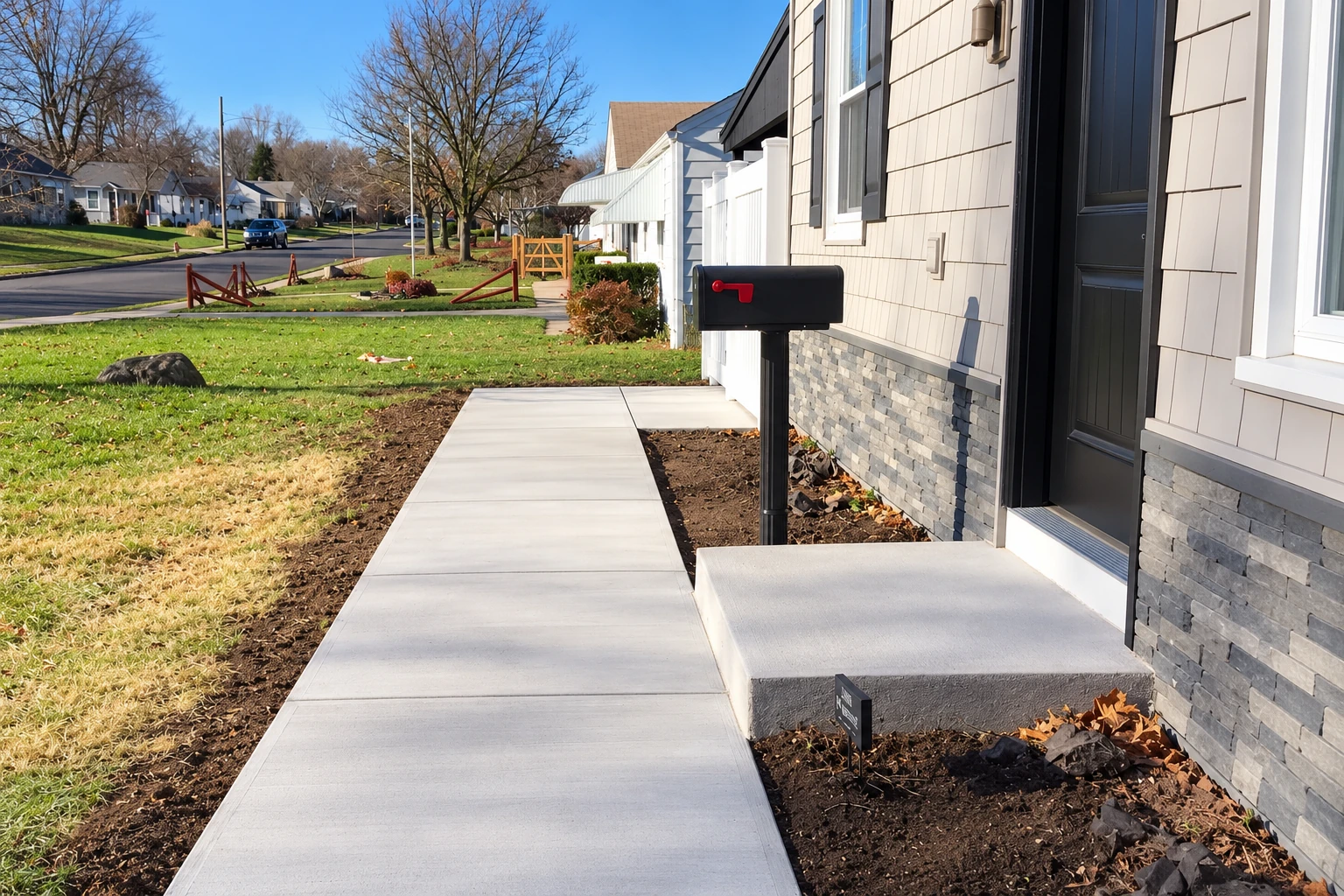
Is a slab foundation right for your Austin lot?
Slab foundation building means pouring a structural concrete slab right on the ground, designed to carry everything the building puts on it, and here in Austin we plan each one around your soil, our frost and the city's permit steps.
If you're planning a new house, an addition or a detached garage, the first thing to settle is whether your lot will take a slab, because if it won't, a deeper foundation installation may be the better fit. The price moves mostly with the slab's size, what it has to carry and how much ground work your lot needs, and the schedule turns on the soil check, the city's review and the weather on pour day. Your written estimate spells out each part of the work for your job. When a job needs a permit, we handle the paperwork and set up the inspections, and if it isn't clear, we call and ask before we start.
How do you know a slab foundation fits your project?
Most people look into a slab because they're planning something new or an old floor has let them down. These are the things homeowners usually notice first, and what each one tends to point to.
You're planning a detached garage or shed and want a floor that also serves as the foundation.
You're adding a room and the plans have it sitting right on the ground instead of over a basement.
Your old garage or shed floor has cracked through and dropped, which usually means the base under it gave way.
Water pools along an old slab's edge after rain, which usually means nobody planned where it would drain.
Doors over an old slab stick after a few winters, which can mean frost is working under it.
The floor over an old slab stays cold by the outside walls, often because the edge was never insulated.
Call while the plans are still on paper, because the soil check, the insulation and the drainage are all easier to settle before anyone digs.
What happens when you call us about a slab in Austin?
Here's how a slab job runs with us, from the first call to the walkthrough, including the city's review and inspections that set the pace before any concrete goes in.
Call and set up a visit
You call or send the form, and I come out myself to look at the lot, take measurements and talk through what the slab will carry. Have any site drawings and plans handy, because the city will want them too.
Get a written, itemized estimate
You get a written estimate that spells out each part of the work, from the dig and the base to insulation and drainage. That way you can see where the money goes and which choices change it before you decide.
Permits, locates and city review
Once you say go, we line up utility locates to mark the buried lines, plus the permit and inspections. Austin asks for 15 working days to review site drawings and plans, and work starts only after the city's building official approves, so we build that wait into the schedule.
Inspections, the pour and walkthrough
The city inspects any underground plumbing before the slab is poured, and checks the footings once the digging, forms and rebar, the steel bars that strengthen the concrete, are in place. I'm on site with our crew through the finish, and before we pack up we walk the job with you and go over how to look after it.
Get a written estimate for your slab foundation
Send the form and we'll reply within one business day to set up a free on-site visit, with no obligation. I'll come out and measure, and you'll get a written quote that spells out what's included.
- Call
- (507) 509-6215
- Hours
- Mon–Fri: 7 AM–11 PM, Sat–Sun: 8 AM–10 PM
Slab plans start with base, insulation and drainage
The subgrade, the ground a slab sits on, is the part you'll never see and the one I care most about. We dig it out and pack it instead of raking loose dirt level, because loose dirt settles and takes the concrete with it, so if the budget gets tight I'd trim the finish before the base. National guidance calls good drainage, like free-draining backfill and an outside footing drain, critical in cold climates for limiting frost heave, the ground lifting as it freezes.
Edge insulation is the choice I bring up first, because it has to be in the plan before the forms go up. National building guidance says most of the heat a slab loses goes out through its outer edge into the soil, and a slab that's poorly or wrongly insulated can lead to energy loss, moisture problems and poor indoor air. It's far easier to get right on day one than to fix later.
Once the base is right, the details on top still count. We like to pour early in the day, since a slab that bakes in midday heat can end up with a weak, dusty top, and we cut control joints, shallow grooves that give the concrete a planned place to crack, before it picks its own. If you're putting up a shop, we can plan the parking lot around it on the same visit.
Slab foundation questions we hear in Austin
How do I know if a slab foundation will work on my lot in Austin?
A slab works when the lot has deep enough sand, or pit run sand and gravel, under it, or when a soil engineer approves it, because that's what Minnesota rules allow. A detached one-story garage, carport or shed no bigger than 1,000 square feet can sit on a slab on any soil except peat or muck. For anything bigger, I want the ground checked before we settle on a slab.
How deep does a slab foundation have to go in Austin, MN?
Footings in Mower County have to reach at least 3-1/2 feet to get below the frost, unless an engineer who knows soil mechanics sets a different depth. A state fact sheet for northern Minnesota notes that the residential code allows frost protected shallow foundations, which reduce that required depth and save on digging, concrete and forms, so it's worth raising before the plans are drawn.
How much does a slab foundation cost in Austin?
The cost comes down to the slab's size and load, how much digging and base work your soil needs, and which options you choose, so there's no honest number until I've seen the lot. The shallow frost protected design mentioned above can trim digging and concrete, while edge insulation and drainage add to it up front and are much harder to add later. Your written estimate breaks out each part so you can see what every choice does to the total.
How do I get a building permit for a slab foundation in Austin, MN?
Permits come from the city's Building Department, and Austin requires one for any alteration or addition to an existing building or structure, so an addition on a slab needs one. New homes go through the same office and its plan review. As I said up top, the paperwork and inspections are on us, and when it isn't clear whether your project needs a permit, we ask the city before we start.
Who is allowed to build a slab foundation for my house in Minnesota?
If you hire a builder directly for a one to four unit home and the job takes more than one special skill, Minnesota requires a residential building contractor or residential remodeler license from the state Department of Labor and Industry. We're licensed and insured, and I'm the one who comes out to look at your job, with our own crew doing the work and me there running it.
Does a new house on a slab need a radon system in Minnesota?
Yes, a new home in Minnesota has to have a passive radon mitigation system, which draws radon gas from under the slab and vents it outdoors. It's one more reason to plan the slab, the plumbing and that piping together before anything gets poured.
Other concrete work that goes with a slab
Foundation installation
If your soil won't carry a slab or you'd rather have a basement or crawl space, a full foundation with deeper walls may suit the house better.
Concrete parking lot building
Putting up a shop or small business building on a slab usually means the lot comes next, and it's easier to plan grades and drainage together.
Talk through your slab plans with me
Call Austin Concrete Company at (507) 509-6215 or email projects@concretecompanyaustin.com and tell me what the slab will carry, since a garage, an addition and a whole house each follow different rules.
Mon–Fri: 7 AM–11 PM, Sat–Sun: 8 AM–10 PM