
Concrete sidewalk building in Austin MN - a walk built to shed water and stay even
Cracked, tipped or puddling sidewalk? We dig out, pack the base and pour a new walk that's sloped to drain off the edges.
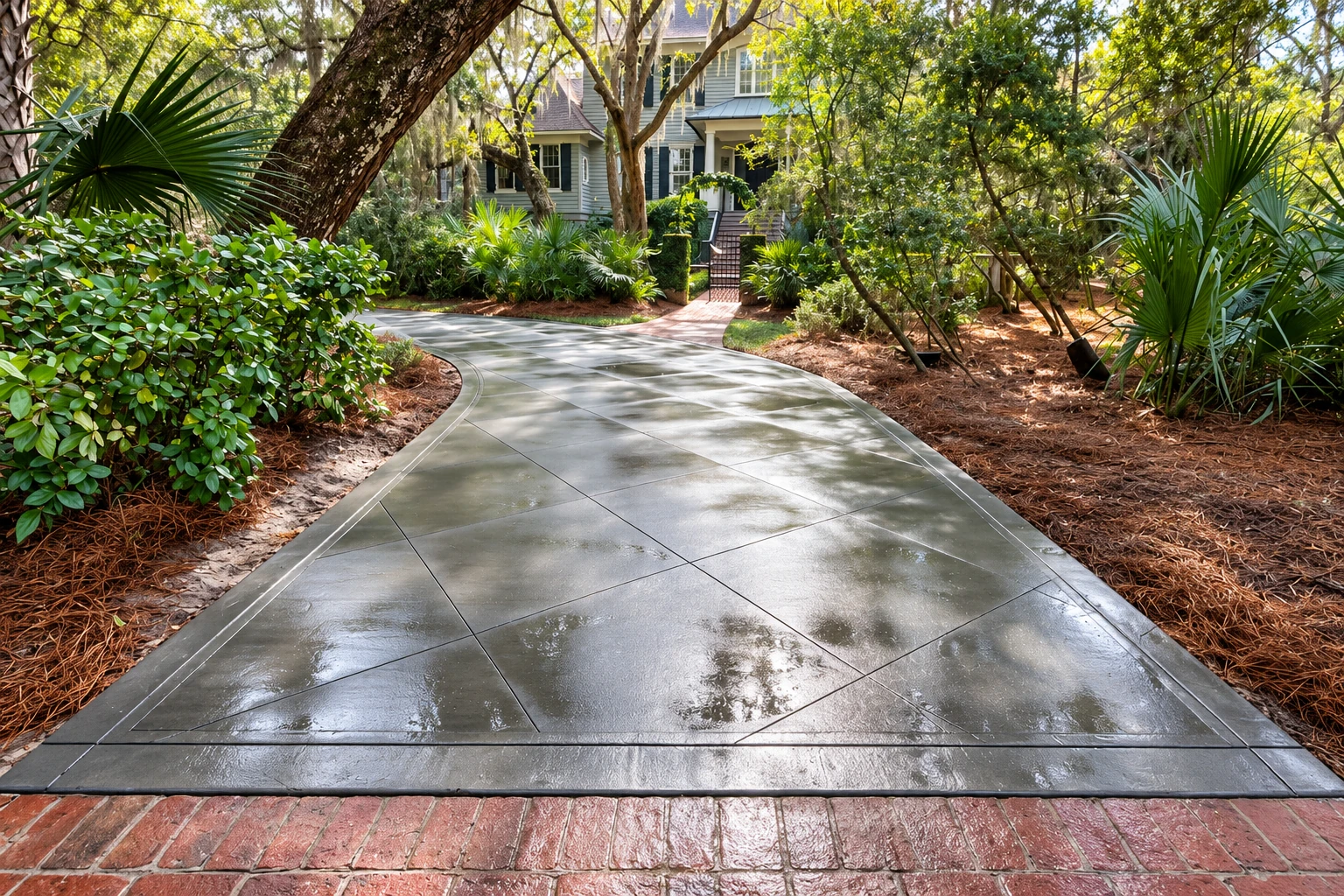
What goes into building a new concrete sidewalk in Austin?
Concrete sidewalk building means pouring a new walk or tearing out and rebuilding a worn one, and at Austin Concrete Company we do it for homes in Austin, MN and the cities around it so your walk stays safe to use and sheds water.
Most calls start with a walk that's cracked, tipped at the joints or holding puddles, and patching it again usually only buys you a season or two. The price mostly turns on how long and wide the walk is, how much old concrete comes out and whether part of it crosses your driveway, while the schedule turns on the weather and, for a public walk, the city's approvals, so your written estimate spells out each part for your own walk. In Minnesota, a company that contracts with you directly for more than one kind of skilled work needs a residential building contractor or remodeler license from the state, and we're licensed and insured. If the walk runs up to a garage floor that's in rough shape too, I can look at garage floor concrete on the same visit.
How can you tell your sidewalk needs replacing?
Most sidewalks tell you they're done before they fail outright, and most of what you see traces back to the base, the water or the joints. Here's what I look for.
Slabs that have tipped or lifted at the joints usually mean the dirt underneath has moved or washed out.
Water that sits on the walk or along its edges after rain usually means the slope is wrong.
Cracks wandering through the middle of a slab, not at the joints, usually mean a weak base.
A top that's flaking, chipping or turning dusty usually means water and freezing have worked into the surface.
A slab heaved up by a tree root usually needs the root dealt with before a new walk goes in.
A walk that tips toward your house sends rain at your foundation instead of out to the yard.
If someone's already catching a toe on a lifted edge, call (507) 509-6215 now rather than waiting for the next freeze to push it higher.
What happens after you call about a sidewalk in Austin?
I'm the one who answers the phone and comes out to look, and our own crew does the work with me there running it. Here's how a sidewalk job usually goes.
Call and set a visit
You call (507) 509-6215 or send the form, and we set a time for me to come look at the walk. It helps to know the rough length, whether it crosses your driveway and when you'd like it done.
Measure and talk it through
I measure, check where the water runs and talk through what you want and the choices that fit it. Then you get a written estimate that spells out each part of the work, from tear-out to the finish, so you can see where the money goes.
Line up approvals and the pour
Once you say go, we line up utility locates and, for a walk in the street or other public property, the city permit and the contractor registration the city's right-of-way rules call for. Before we pour, we call the city's Engineering Department out to inspect, and we schedule inside the city's pour season.
Pour, finish and walk through
I'm on site with our crew through the finish, and when the air turns cold we cover new concrete in the city's right-of-way, as the city asks, so it can cure, the slow hardening that sets its strength. Before we pack up, we walk the job with you and go over how to look after it.
Get a free on-site estimate for your new sidewalk
Send the form and we'll get back to you within one business day to set a time for me to come out. The estimate is free, done on site and comes with no obligation.
- Call
- (507) 509-6215
- Hours
- Mon–Fri: 7 AM–11 PM, Sat–Sun: 8 AM–10 PM
Base, slope and joints on a new sidewalk
The part I care most about is the part you won't see. We dig out and pack the subgrade, the dirt the walk sits on, instead of just raking it level, because a walk on loose dirt settles right along with it. When a budget gets tight, the base is usually the first thing people want to trim, and I'd rather you give up a fancy finish than skimp underneath.
We plan the walk so rain runs off and doesn't pool along the edges, and we cut control joints, shallow grooves that tell the slab where to crack, before it picks its own spot. Concrete holds up better when it drains instead of staying soaked, though a downspout or snow pile can still wear hard on one spot even when the rest drains fine.
Where your walk crosses the driveway, the city's sidewalk guidelines call for a thicker pour so it can take cars, so expect your estimate to show that thicker section. Most walks get a broom finish, fine grooves that give your shoes grip in wet weather, and if you'd like color or a pattern, that's decorative concrete work we can price alongside it.
Sidewalk questions we hear in Austin
When can a concrete sidewalk be poured in Austin, MN?
In the city's right-of-way, Austin allows sidewalk pours after spring road restrictions lift, usually around mid-May, and before frost forms in the soil, usually around mid-November. The dates shift a little each year, so if you're hoping for an early or late pour, check with the city's Engineering Department first. We book inside that window, so calling early in the year helps.
Who issues sidewalk permits in Austin, MN?
The City Administrator issues written permits to construct or reconstruct a sidewalk in any street or other public property, after the City Engineer approves. All sidewalk work in Austin follows the specifications on file in that office, so you can ask how a bid meets them. We handle the paperwork and inspections, and if you're not sure which approval fits your walk, the Engineering Department can tell you.
How much does a new concrete sidewalk cost?
Across the US, concrete sidewalk installation usually costs about $12 to $14 per square foot. That's the national market, not our price, and your written estimate breaks out each part for your own walk.
Who pays to fix a sidewalk next to my property in Austin?
Under Austin's city code, the owner of the property next to a sidewalk is primarily responsible for keeping it up. If required repairs don't get done, the City Council can order the work and assess the cost to that owner. If you've heard from the city about a section, call us and I'll come take a look.
What causes a new concrete sidewalk to crack?
Most cracks in a new walk come from a base that was raked level instead of packed, joints cut late or skipped, water sitting against the slab or a pour in midday heat that leaves a weak top. Concrete does crack, so control joints give it a straight line to do it in, and a packed base and good slope keep the rest of the walk from moving. That's where we spend our time, because concrete only gets one shot.
How do I take care of a new concrete sidewalk its first winter?
Skip the deicers the first winter and use sand for traction, which is what one out-of-state concrete trade group's cold weather guide advises. That's general concrete guidance, not an Austin rule, and we go over care with you when we walk the finished job.
Other concrete work around your house
Garage floor concrete
If the walk ends at a garage floor that's cracked, pitted or holding water, we can plan both pours together so the two surfaces meet cleanly.
Decorative concrete
When plain gray isn't what you want out front, color, patterns and borders can dress up a walk while still sitting on the same packed base.
Get your new sidewalk on the schedule
Call (507) 509-6215 any day, since we're open until 11 PM on weekdays and 10 PM on weekends, or send the form if that's easier.
Mon–Fri: 7 AM–11 PM, Sat–Sun: 8 AM–10 PM